
Masashi Kishimoto is the Japanese manga artist who created Naruto. This ninja saga sold over 250 million copies worldwide and turned a rejected art student into one of modern pop culture’s most influential storytellers. Born in 1974 in Japan’s Okayama Prefecture, he spent a decade being turned down by publishers before Naruto became a Weekly Shonen Jump staple in 1999. What makes his story worth reading isn’t just the sales numbers. It’s what he did after Naruto ended: a public creative failure, a decision to hand his own franchise to younger artists, and a slow, still-unfinished return to the drawing table.
From Okayama Twin to Shonen Jump Hopeful
Kishimoto was born on November 8, 1974, in Nagi, a small town in Okayama Prefecture, as the older of identical twin boys. His twin brother, Seishi Kishimoto, would also grow up to become a professional manga artist. The brothers spent their childhood drawing characters from anime shows rather than playing typical schoolyard games.
Kishimoto has said that creating manga is less about drawing skill and more about writing a story worth telling, and that keeping both honest is what keeps a series from failing. That belief traces back to his teenage years, when Dragon Ball creator Akira Toriyama became his defining influence. He studied art at Kyushu Sangyo University while continuing to draw manga on the side, treating it less like a hobby and more like an apprenticeship for a career he had already decided on.
The Ten-Year Climb Before Naruto Began
Most casual fans don’t realize how long Kishimoto worked in obscurity. He submitted manga pitches to Weekly Shonen Jump for years, collecting rejections before an early version of Naruto, centered on a fox spirit boy, caught an editor’s attention. The version that eventually launched in 1999 looked very different from his first drafts. Kishimoto reworked the lead character, the tone, and the ninja setting multiple times before Shueisha agreed to serialize it.

This grinding, unglamorous stretch rarely gets attention in shorter profiles, but it explains why Kishimoto later became known for pushing through creative dead ends instead of abandoning a project. The discipline built during those rejected pitches shows up again and again later in his career.
Naruto: The Fifteen-Year Run That Changed Manga
Naruto ran in Weekly Shonen Jump from 1999 to 2014, spanning 72 collected volumes. By the time the series ended on November 10, 2014, it had generated global sales of around 200 million copies, a figure that has since climbed past 250 million according to Shueisha’s own reporting. The story followed Naruto Uzumaki, a young outcast ninja carrying a demon fox sealed inside him, as he fought to earn his village’s respect.
The series became a cultural bridge for manga entering Western markets in the early 2000s, alongside Dragon Ball and One Piece. It spawned two long-running anime adaptations, a string of theatrical films, and a video game business that has moved tens of millions of units. Kishimoto received Japan’s Agency for Cultural Affairs “Rookie of the Year” recognition for his contributions to the series, and Naruto itself won a Quill Award in 2006, an unusually mainstream honor for a manga at the time.
What separated Naruto from other long-running shonen series was Kishimoto’s willingness to slow down and revise arcs he felt weren’t working. He has spoken about scrapping planned story beats mid-series when reader response or his own instincts told him a plot thread wasn’t earning its place. That habit of cutting material rather than padding it out is part of why the series held together across 700 chapters instead of visibly running out of ideas.
The Post-Naruto Pivot: Samurai 8 and Learning From Failure
Most creator profiles skip straight from Naruto’s ending to Kishimoto’s current status. That gap hides one of the more interesting parts of his career: a public failure he had to work through in front of the same audience that made him famous.
In 2019, Kishimoto launched Samurai 8: The Tale of Hachimaru, his first new serialized manga since Naruto, again in Weekly Shonen Jump. The series was cancelled after 43 chapters and five collected volumes, ending in March 2020, well short of its planned run. For a creator of Kishimoto’s stature, an early cancellation in the same magazine that made him a household name was a visible setback rather than a quiet misstep.
1. Why Samurai 8 Ended Early
Fan and industry commentary since the cancellation has pointed to the series falling short of its planned ten-volume scope, unable to build the same reader connection Naruto had over its first arcs. Kishimoto has not attributed the ending to any single cause publicly, but he has repeatedly referenced the experience when discussing why he has been cautious about jumping into another full serialization since.

That caution is worth noting because it runs against the usual narrative of an untouchable industry legend. Kishimoto’s own account suggests Samurai 8 changed how he thinks about starting new work, favoring smaller, lower-risk projects over another immediate multi-year commitment.
Behind Boruto: Supervising Without Taking Over
Since 2016, Kishimoto has supervised the Boruto: Naruto Next Generations manga rather than writing and drawing it himself, a role split between original creator Ukyo Kodachi and later writer Masashi Kishimoto’s own story input, with artist Mikio Ikemoto handling illustration. This arrangement is a deliberate choice, not a step back from relevance. Kishimoto has described his role as protecting the world and characters he built while letting younger creators develop their own storytelling voice inside it.
That decision matters more than it might seem. Many manga creators either keep total control of a sequel or walk away entirely. Kishimoto chose a middle path, staying involved enough to shape major plot decisions in arcs like Boruto: Two Blue Vortex while giving Ikemoto room to draw and pace the story his own way.
Net Worth and Business Interests
Kishimoto’s exact net worth is not officially published, so any figure circulating online is a public estimate rather than a confirmed number. Several entertainment and biography sites place his net worth at around 20 million dollars, tied primarily to manga royalties, anime licensing, and merchandise tied to the Naruto franchise. That estimate should be read as a rough range rather than an audited figure, since Kishimoto and Shueisha have not released official earnings data.
Beyond direct manga income, Kishimoto has earned royalties and creative fees from the Naruto anime adaptations, a long-running string of theatrical films, and video games including the Ultimate Ninja Storm series, which has passed 30 million units sold worldwide. He has also contributed character designs and story input to games rather than treating licensing as a hands-off revenue stream, which has kept the franchise’s visual identity consistent across media.
Family Life and Private Persona
Kishimoto keeps his personal life largely out of public view, a contrast to the global visibility of his work. Public records confirm he has one child, but he rarely discusses his family in interviews beyond general references to how spending time with them has shaped his creative decisions in recent years. His identical twin brother, Seishi, remains the closest publicly known family connection, and the two have occasionally acknowledged each other’s influence, despite building distinct manga careers in different genres.
This restraint is consistent with how Kishimoto talks about his work generally. He tends to frame personal milestones, including his reasons for slowing down after Naruto, in terms of family rather than industry pressure or business strategy.
What Comes Next: One-Shots and a Possible New Manga
In July 2023, Kishimoto released a 55-page one-shot centered on Minato Namikaze titled Naruto: The Whorl Within the Spiral, his first standalone Naruto story since the main series ended. He has since said he is considering a follow-up one-shot centered on Itachi Uchiha, ranked among the characters fans most wanted to see explored further.
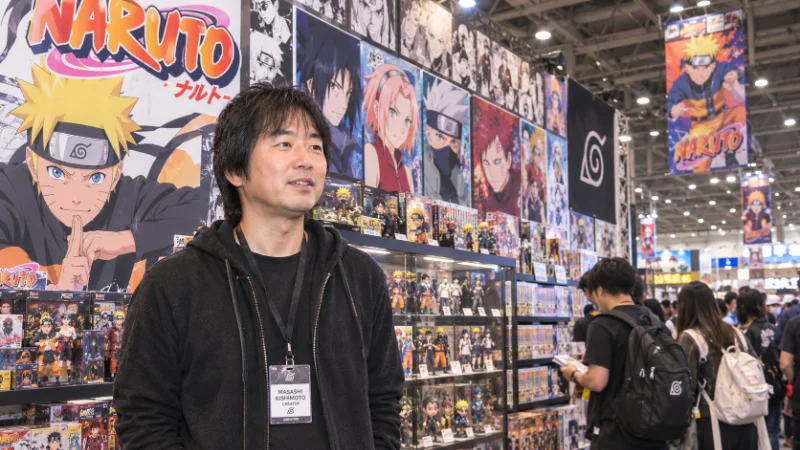
At an August 2025 fan event in Paris called Konoha Experience, Kishimoto told a crowd of around 2,500 people that he feels a new creative “goal” approaching, crediting time with family and direct fan interaction for reinvigorating his motivation. He has separately said he wants to apply personal life lessons to a future series the way he once did with Naruto, though he has not confirmed a title, timeline, or whether it connects directly to the Naruto universe.
Kishimoto’s Legacy in the Manga Industry
Naruto’s influence on manga and anime distribution in the West is hard to overstate. Alongside Dragon Ball and One Piece, it helped convince American publishers and streaming platforms that Japanese comics could sustain mainstream audiences rather than a niche fanbase. The series has been credited with over 250 million copies sold across 46 countries, numbers that shaped how publishers approached licensing shonen manga for the next decade.
What separates Kishimoto from peers who created a single hit and moved on is his continued involvement in the franchise’s second act. Rather than simply collecting royalties from Boruto, he stayed close enough to guide major story arcs while making room for the next generation of artists to take creative credit. Combined with his public willingness to admit Samurai 8 didn’t work, that pattern points to a creator less interested in protecting a legacy through silence and more interested in staying honest about what succeeded and what didn’t.