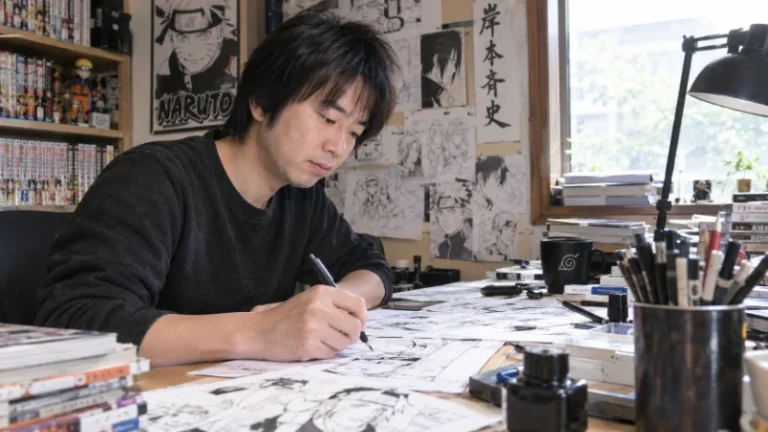
Koyoharu Gotouge is the pen name of the manga artist who created Demon Slayer: Kimetsu no Yaiba, one of the best-selling comic series ever published. Gotouge wrote and drew the story from 2016 to 2020, then watched it grow into a global anime and film franchise while keeping their own identity completely private.
That last part is what makes Gotouge unusual. People searching this name are often as curious about the mystery as they are about the manga itself. Nobody has confirmed Gotouge’s face, gender, or much about their personal life outside interviews conducted through an editor. What is confirmed is a career built on four rejected short stories, one editor’s stubborn faith, and a series that reshaped how Japan’s publishing industry thinks about manga.
| Category | Details |
|---|---|
| Real Name | Not publicly known; Koyoharu Gotouge is a pen name |
| Born | May 5, 1989, in Fukuoka Prefecture, Japan |
| Known For | Demon Slayer: Kimetsu no Yaiba, serialized from 2016 to 2020 |
| Manga Sales | More than 220 million copies in circulation worldwide as of July 2025, according to Oricon News |
| Major Awards | Noma Prize (2020), Tezuka Osamu Cultural Prize (2021), and Japan Cartoonists Association Award (2021) |
| Recognition | Named to Time’s 100 Next list in February 2021, becoming the first manga artist to receive the honor |
Why the Demon Slayer Creator Stays Anonymous
Gotouge has never released a verified photograph or confirmed a gender, and Time’s own profile of the artist stuck to gender-neutral language. In place of a face, Gotouge appears in interviews and public statements as a small hand-drawn character: an alligator wearing round glasses. That doodle is the closest thing fans have to a portrait.
Keeping a low profile is common among Japanese manga artists, but Gotouge has pushed the practice further than most peers, letting Demon Slayer speak for itself rather than building a personal brand around a public face. Because of that, low-quality fan sites and translated blog posts sometimes guess at a gender or a birthplace with no real backing. None of those guesses have been confirmed by Gotouge, by the publisher Shueisha, or by any credible outlet, so they are worth treating as speculation rather than fact.
The alligator sketch is not a one-off joke either. It shows up consistently in end-of-volume author comments, convention messages, and official Demon Slayer merchandise tied to Gotouge personally, standing in for a face the public has never seen. Readers hoping for an eventual reveal have little reason to expect one. Gotouge has kept this arrangement in place for well over a decade, through a manga finale, multiple award ceremonies, and a billion-dollar film trilogy, without ever breaking from it.
Early Life and Four Rejections Before Demon Slayer
Gotouge was born on May 5, 1989, in Fukuoka Prefecture, on the southern island of Kyushu, according to Wikipedia and the Japanese entertainment outlet Comic Natalie. The debut came in 2013 with a one-shot horror story called Kagarigari, which earned an honorable mention at Shueisha’s 70th Jump Treasure Newcomer Manga Awards.
Three more one-shots followed between 2014 and 2015: Monju Shirō Kyōdai, Rokkotsu-san, and Haeniwa no Zigzag. None of them turned into an ongoing series, and Comic Natalie reported that it was the failure of that fourth story which finally forced a change in direction.
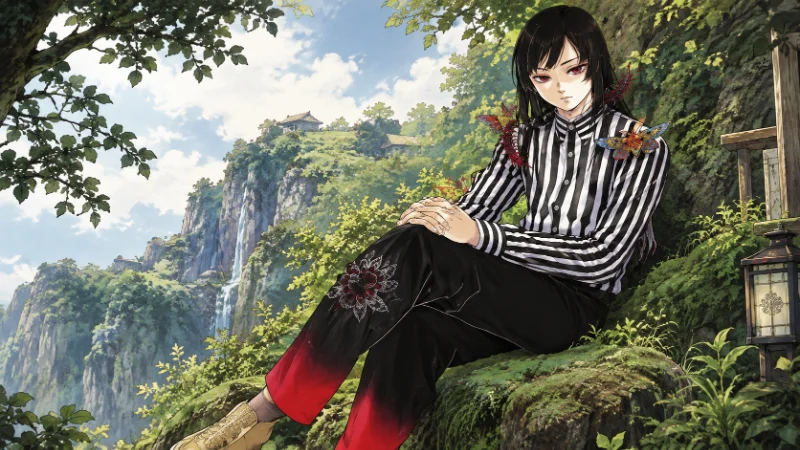
That string of rejections led to the turning point. Gotouge’s first editor, Tatsuhiko Katayama, suggested building a new series around a theme readers could grasp instantly, according to an account published on Shueisha’s Manga Plus platform. Gotouge returned to the demon-hunting concept from Kagarigari and reworked it into a story about a boy trying to save his demon-turned sister. That story became Demon Slayer: Kimetsu no Yaiba.
How Demon Slayer Became a Publishing Phenomenon
Weekly Shonen Jump serialized Demon Slayer from February 15, 2016, to May 18, 2020, according to Wikipedia and Comic Natalie’s coverage of the finale. Shueisha collected the run into 23 tankobon volumes. By July 2025, the manga had sold more than 220 million copies worldwide, including digital editions, based on figures Oricon News published that month, placing it among the best-selling manga series ever printed.
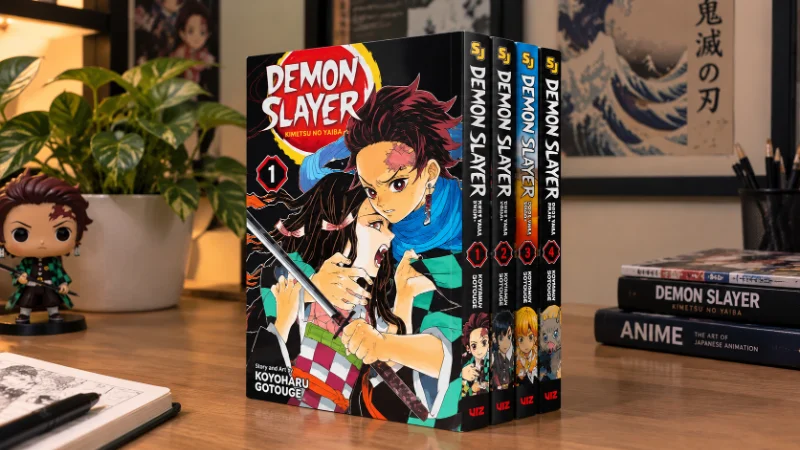
Gotouge ended the story at its natural conclusion rather than stretching it indefinitely, a decision that stood out in a genre where long-running franchises are the norm. The choice did not hurt sales. In 2020, Kodansha awarded Gotouge the Noma Publishing Culture Prize specifically because Demon Slayer’s sales helped lift Japan’s entire print publishing industry during 2019 and 2020, according to Anime News Network’s coverage of the award.
The Storytelling Style Behind Demon Slayer’s Appeal
Gotouge has named Hirohiko Araki’s JoJo’s Bizarre Adventure, Masashi Kishimoto’s Naruto, Tite Kubo’s Bleach, and Hideaki Sorachi’s Gintama as direct influences, according to interviews cited on Wikipedia and in Otaku USA magazine. Those influences show up in Demon Slayer’s mix of stylized combat, dark folklore, and unexpectedly warm family dynamics, a combination that set it apart from other action titles running in Weekly Shonen Jump at the time.
The core of the story, a boy trying to cure his demon-turned sister rather than simply defeat a villain, gave the series an emotional throughline that held even through its most violent chapters. Critics have often pointed to that focus on family bonds over pure power escalation as the reason Demon Slayer crossed over to readers who do not normally follow shonen manga, widening its audience well past the usual fan base.
Awards and Industry Recognition
Recognition kept building through 2021. Gotouge won the award for best screenplay and original story at the Tokyo Anime Award Festival in 2020, then became the first manga artist ever named to Time’s 100 Next list that February, according to Time’s own profile of the artist. The following month brought Japan’s Newcomer Award in the media arts category from the Ministry of Education, Culture, Sports, Science and Technology.
By the end of 2021, Gotouge had also picked up the Special Prize at the 25th Tezuka Osamu Cultural Prize and the comic division’s grand prize at the 50th Japan Cartoonists Association Awards, according to Anime News Network’s reporting on both ceremonies. Few manga creators collect that range of honors, spanning industry, government, and international press recognition, inside a single two-year stretch.
The recognition was not limited to industry panels. “Kimetsu no Yaiba” made the shortlist for Japan’s annual Buzzword Grand Prize in 2020, an honor voted on by publisher Jiyukokuminsha and usually reserved for phrases tied to national news events, according to Tokyo Weekender’s coverage of that year’s list. The same franchise also topped Yahoo Japan’s search awards for anime two years running, a sign that public interest in the story, and in the person who wrote it, kept climbing even without a face attached to the name.
The Leap to Film: Mugen Train and Infinity Castle
The 2020 film Demon Slayer: Kimetsu no Yaiba the Movie: Mugen Train became the highest-grossing film in Japanese box office history at the time, earning roughly 40.7 billion yen, a domestic record that still stood five years later according to trade coverage from Cartoon Brew. That record gave the franchise a new kind of cultural weight beyond the manga’s print sales.
Infinity Castle, the first installment of a planned movie trilogy produced by the animation studio Ufotable, opened in Japan on July 18, 2025. It set a new single-day box office record on release and sold more than 18 million tickets in its first month, according to Cartoon Brew’s box office reporting. The film crossed $600 million worldwide by the end of September 2025, becoming the first Japanese-produced film to reach that mark, according to Soap Central’s coverage of its global run.

In North America, Infinity Castle opened to $70 million, the biggest opening weekend any anime film had recorded there, and went on to become the highest-grossing non-English-language release in that market, according to reporting from SBS Star and Cinemateca. By early 2026, the industry tracker Gold House put its worldwide total above $778 million, with a second installment in the trilogy expected in 2027.
What Is Next for the Creator
In February 2021, shortly after Demon Slayer wrapped, Gotouge told Anime News Network that the next project would be a science fiction romantic comedy. No title, release date, or further detail has been confirmed publicly since that interview. As of 2026, no new serialized manga from Gotouge has been announced, and the creator’s public role has centered on supervising the Demon Slayer film trilogy rather than starting new print work, based on available reporting. Any specific title or release date circulating online should be treated as unconfirmed until Shueisha or Gotouge’s own channels confirm it.
Koyoharu Gotouge Net Worth: What Is Actually Known
Neither Gotouge nor Shueisha has published an official net worth figure, and no financial disclosure exists for a creator who works under a pen name. Several low-quality sites circulate specific dollar figures for Gotouge’s wealth, but those numbers contradict each other and get basic facts wrong, including the artist’s birth year and the studio behind the anime. None of them cite a verifiable financial source, so no reliable total can be reported here.
What is verifiable is the scale of the underlying business. Manga royalties, anime licensing fees, box office participation, and a large merchandise catalog all flow from a franchise that has sold more than 220 million print copies and grossed hundreds of millions of dollars at the box office in 2025 alone. Exactly how much of that reaches Gotouge personally has never been disclosed.
The Legacy of an Artist Who Stayed Invisible
Gotouge’s biggest influence on the industry might not be Demon Slayer’s plot, but the proof that a manga creator does not need a public face to build a franchise this size. Most successful mangaka, from Eiichiro Oda to Masashi Kishimoto, are recognizable figures who appear at conventions and give on-camera interviews. Gotouge built comparable commercial success, and arguably faster global expansion through the Infinity Castle trilogy, entirely through the work itself.
That model matters beyond one franchise. Shueisha credited Demon Slayer’s sales with helping revive parts of Japan’s print publishing business at a time when the industry was shrinking, a point the Noma Prize committee cited directly when it honored Gotouge in 2020. Years after ending the manga at a deliberate finish rather than dragging it out, Gotouge remains one of the few creators whose name readers recognize without a face to attach to it, and the choice to stay unseen has become as much a part of the Demon Slayer story as the manga itself.