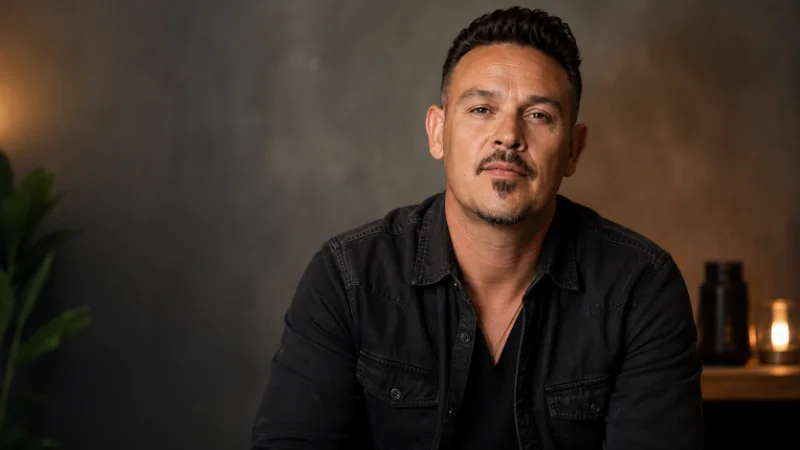
Kevin Alejandro has spent more than two decades playing the kind of characters that stick with viewers long after a show ends. He is the actor who made Daniel Espinoza more than comic relief on “Lucifer,” who turned Sebastian Blood into one of “Arrow’s” more unsettling villains, and who now trains rookie firefighters as Manny Perez on CBS’s “Fire Country.” His path to that point started far from a soundstage, in a childhood marked by real hardship in Texas.
What makes Alejandro’s career worth a closer look is not a single breakout moment. It is the pattern underneath it: a working actor who kept landing supporting roles across very different genres, from soap opera to crime procedural to superhero drama, and who turned nearly every one of them into something the audience remembered. This piece walks through that path in order, from his early years in Texas to his current run on network television.
Early Life in Texas
Kevin Michael Alejandro was born on April 7, 1976, in San Antonio, Texas, and was raised mostly in Snyder, Texas, by his parents, Dora Alejandro and Tomas Hernandez. His childhood was not easy. He and his mother lived in shelters until he was eight years old, a detail he has referenced when discussing how far he had to travel to build an acting career.
He found drama in high school, where a teacher named Jerry Worsham encouraged him to pursue it seriously. That interest carried him to the University of Texas at Austin, where he studied theatre. Theatre training of that kind tends to show up later in an actor’s work, particularly in how comfortable they are carrying long emotional scenes without relying on flashy dialogue, and it is a thread that runs through much of what Alejandro has done on screen since.
After college, he made the decision that defines a lot of actor origin stories: he sold what he owned and moved to Los Angeles to try to work in the industry, with no guarantee it would pay off. There was no fallback plan built into that move. Like most actors who take that leap, he spent the years right after arriving in Los Angeles auditioning steadily and taking whatever roles came his way, building a résumé one guest appearance at a time rather than landing on a hit show right out of the gate.
Breaking Through on Television
Alejandro’s screen career began with the 2003 film “Purgatory,” and his first TV credit came on “Crossing Jordan.” He spent the mid-2000s picking up guest and recurring roles that most working actors will recognize as the grind before a breakout: Dominic Hughes on “The Young and the Restless” from 2004 to 2005, a season on Showtime’s “Sleeper Cell,” a stint on the Fox action drama “Drive,” and guest spots on “CSI: Miami,” “Charmed,” “Big Love,” “NCIS,” and “24.” He also played Santos on “Ugly Betty,” a recurring role that gave him his widest audience up to that point.
The role that changed his trajectory was Nate Moretta on “Southland,” the TNT (originally NBC) crime drama that ran from 2009 to 2013. “Southland” was known for a stripped-down, almost documentary style of shooting patrol work in Los Angeles, and Alejandro’s Moretta fit that tone well: a training officer whose steadiness masked real strain underneath. His performance earned him the Imagen Award for Best Supporting Actor in a Drama Series, one of the first major industry recognitions of his career and a sign that casting directors outside the show had started paying attention.
True Blood, Arrow, and a Run of Genre Roles
While “Southland” was still airing, Alejandro joined HBO’s “True Blood” as Jesus Velasquez, a nurse and practicing witch who became one of the show’s more complicated love interests. The part ran from 2010 to 2012 and brought him an Imagen Award nomination.
He followed that with a turn on “Golden Boy” as Detective Tony Arroyo in 2013, then moved into the DC television universe as Sebastian Blood, also known as Brother Blood, on The CW’s “Arrow.” Playing a corrupt Starling City politician turned supervillain gave Alejandro one of his most recognizable roles among comic book fans, and he stayed with the series from 2012 to 2015.
Alongside television, he built a film résumé that includes “Crossing Over” opposite Harrison Ford in 2009, Kevin Smith’s “Red State” in 2011, and smaller independent films like “Medeas” and “Safelight.” None of those films turned Alejandro into a movie star in the traditional sense, but they kept him working across formats at a point in his career when many television actors stay locked into a single medium, and they gave him range that later showed up in how he approached villain roles on network TV.
Lucifer and the Role Fans Know Him For Best
For most viewers who found Alejandro in the last decade, he is Detective Daniel “Dan” Espinoza from “Lucifer.” The show, which began on Fox in 2016 before moving to Netflix for its final seasons, ran through 2021. Dan started as a fairly one-note obstacle for the main characters and grew into one of the series’ most fully realized figures, a flawed cop working through guilt, grief, and fatherhood while surrounded by literal angels and demons.
The role gave Alejandro his largest sustained audience and a fan base that has followed him closely since. Part of what made Dan Espinoza land with viewers was the writers’ willingness to let a supporting cop character carry genuinely dark material, including grief storylines that ran across multiple seasons, and Alejandro’s performance is frequently cited by fans as one of the show’s most consistent through-lines even as “Lucifer” moved networks and shifted tone.
The role also opened doors behind the camera. Alejandro has directed episodes of television, adding a directing credit to a résumé that already spanned acting, producing, and writing. Moving into directing while still acting on the same production is a common next step for performers who have spent years on set absorbing how a show is built scene by scene, and Alejandro’s transition followed that familiar path.
Fire Country and the Current Chapter of His Career
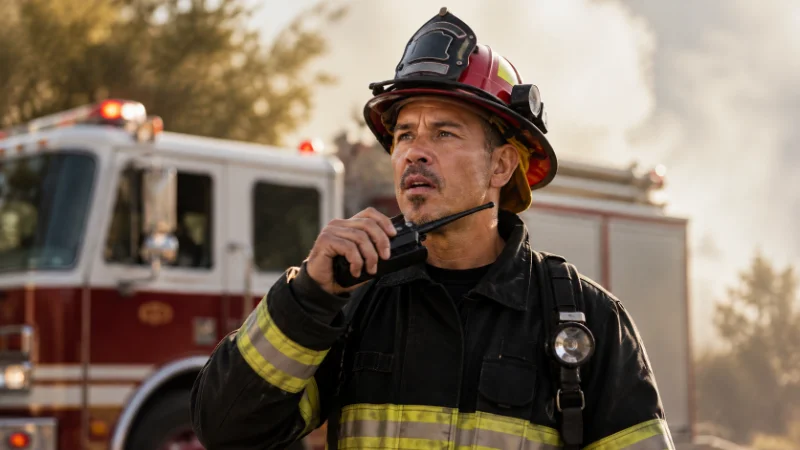
Since 2022, Alejandro has starred as Manny Perez on CBS’s “Fire Country,” an action drama about inmates who fight wildfires through a California rehabilitation program while working alongside professional firefighters. Manny trains the incarcerated crew members and anchors much of the show’s emotional core.
The role has since expanded beyond the original series. Alejandro appeared in “Sheriff Country,” the “Fire Country” spinoff centered on Sheriff Mickey Fox, and the two shows have staged crossover events that bring his character into Edgewater’s wider story. A two-part crossover between “Fire Country” season five and “Sheriff Country” season two aired in November 2026, with Manny joining other characters in a hostage crisis storyline that pulled together both shows’ casts for a single two-hour event. “Fire Country” has continued into its fourth season on CBS, keeping Alejandro in one of the more stable and visible roles of his career, and the franchise’s early renewal pattern suggests both series will keep running for at least another season or two.
The show itself sits in a genre CBS has leaned on heavily in recent years: a workplace drama built around a high-stakes public service job, in this case California’s inmate firefighting program, where formerly incarcerated crew members work alongside professional firefighters as part of a path toward reduced sentences. Manny’s role as the instructor who has to balance discipline with genuine investment in his crew gives Alejandro a character type he had not played at length before, closer to a mentor than the morally compromised figures that defined much of his earlier work.
Life Off Screen
Alejandro has been married to Leslie de Jesus since 2004, and the couple has one son. He lives in Los Angeles with his family, a stable home base that has stayed constant even as his work has moved between networks, streaming platforms, and studios over the past two decades.
Away from acting, he is a serious disc golf player who has competed in celebrity tournaments, including one held in Wisconsin against some of the sport’s top competitors. It is a detail that surprises people who only know him from his more intense on-screen roles, and it is one he has been happy to talk about in interviews tied to his television work, treating it less as a celebrity hobby and more as a genuine competitive pursuit.
He has spoken about wanting to stretch further as an actor, mentioning an interest in comedy, romantic comedy, and classical period roles, including a stated desire to play Macbeth on film. After a career built mostly on dramatic and villainous parts, that ambition points to an actor who still sees room to grow after more than twenty years in the business. It also reflects something common among actors typecast in procedural television: a pull toward material that shows a different register than audiences already expect.
1. A Career Built on Range
Looking at the full list of Alejandro’s credits side by side makes his range clearer than any single role can. He has played a corrupt politician, a witch-nurse, a grieving detective, and a firefighting instructor, often within the same decade. Few actors move between network procedurals, HBO genre television, a CW superhero series, and a Netflix dramedy without becoming identified with just one of them. Alejandro has managed that transition repeatedly, which is part of why casting directors have kept bringing him back for more than twenty years.
That range also explains why his fan base is unusually split across genres. Some viewers know him only from “Lucifer” and have never watched an episode of “Southland” or “Arrow.” Others discovered him through “True Blood” and only later realized the same actor was playing a firefighting instructor on CBS. Very few actors working in American television today can claim that kind of cross-genre recognition without a single lead role anchoring a network’s biggest hit, and it says something about how consistently Alejandro has delivered in supporting parts that studios keep writing bigger roles around him.
Alejandro’s story is a reminder that a long acting career rarely follows a straight line. It moves through short-lived shows, breakout supporting parts, genre detours, and eventually a role stable enough to build a family around. For Alejandro, that stability has come from playing men who are, on paper, background characters, but who end up carrying entire seasons of television on their shoulders.